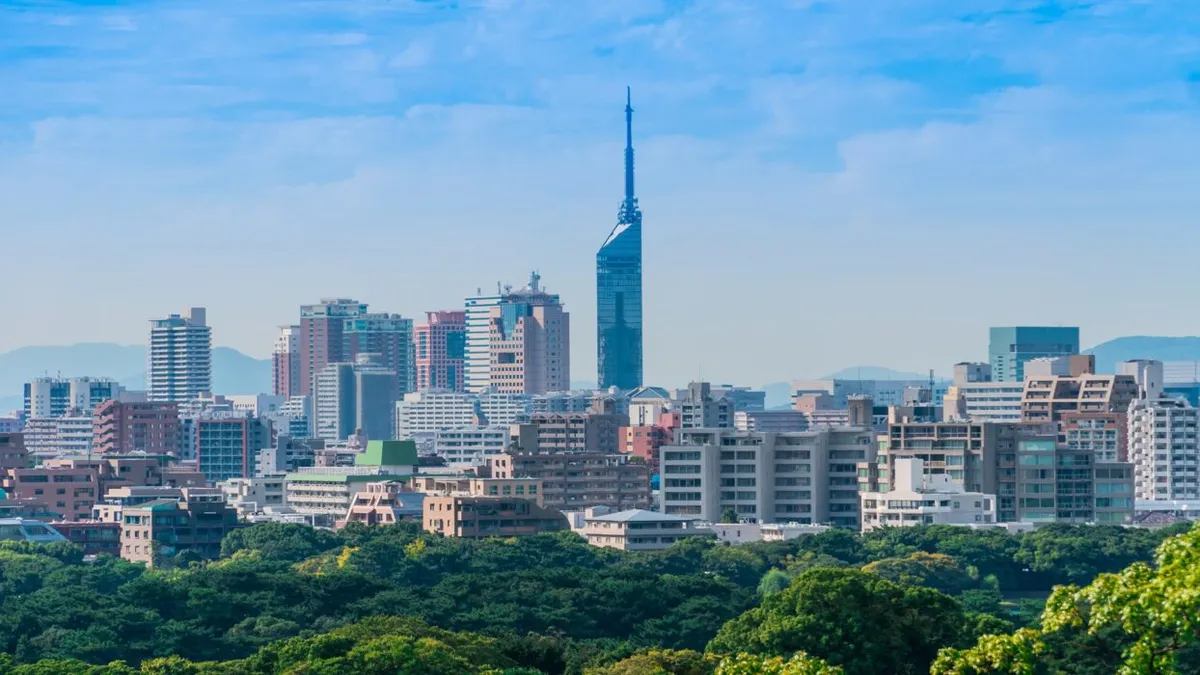
The undisputed capital of tonkotsu ramen. Fukuoka's Hakata ward gave birth to the rich, milky pork bone broth that now rivals Sapporo's miso and Tokyo's shoyu as Japan's most iconic ramen style.
Fukuoka sits at the northern tip of Kyushu, Japan’s southernmost main island, facing the Korean Straits. It is a compact, walkable city with a food culture disproportionate to its size — ranked consistently among Japan’s best eating cities, and widely considered the most approachable for first-time visitors.
Hakata Ramen
The ramen of Fukuoka is tonkotsu — pork bone broth boiled hard and long until the liquid turns milky white. The Hakata style (named for the older city district now folded into Fukuoka) is defined by thin, straight, low-hydration noodles that stay firm in the rich broth, a clean shio or soy-based tare, and a culture of kaedama: when your noodles are nearly finished, you order a fresh serving of noodles to drop into your remaining broth.
The best tonkotsu broth takes 12 hours or more. The bones must first be blanched to purge the blood, then boiled at a rolling boil — deliberately, aggressively — to force the fat and collagen to emulsify. The result is opaque, ivory-white, and intensely porky without being gamey.
The Yatai
Fukuoka’s food culture has a distinctive street dimension. The yatai — small, wheeled food stalls — set up nightly along the banks of the Naka River and around Tenjin. Each yatai seats perhaps eight people under a canvas awning. They serve ramen, yakitori, oden, and local shochu. The atmosphere is convivial and close.
The yatai are an endangered institution — the number has fallen dramatically in recent decades as regulations tightened — but a protected group continues to operate. Eating at a yatai in the evening, particularly in late autumn or winter, is one of the more memorable food experiences in Japan.
Beyond ramen
Fukuoka’s food extends well beyond tonkotsu. Mentaiko (spicy marinated pollock roe) is the city’s other great culinary export, and it appears everywhere: stuffed into rice balls, stirred through pasta, on top of tofu. Hakata ramen shops often serve gyoza (Hakata gyoza are thinner-skinned and smaller than the Chinese original) and the city has a strong culture of yakitori and robata grilling.
Motsunabe — a hot pot of beef or pork offal with cabbage and chives in a garlic-and-soy or miso-based broth — is a winter essential.
What to eat
- Tonkotsu ramen: The reason you came
- Mentaiko onigiri: From a convenience store or specialist shop, eaten for breakfast
- Hakata gyoza: Small, crisped-bottomed, wrapped thinly
- Motsunabe: Only in the colder months
- Yatai yakitori: Eat at a riverside stall, around 9pm
Recipes from Fukuoka 1
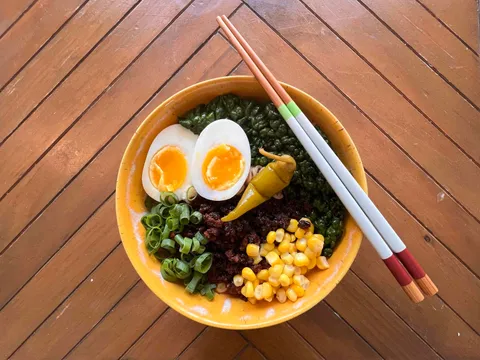
Classic Tonkotsu Ramen
Classic Fukuoka-style tonkotsu ramen — rich, milky pork bone broth built over 12 hours, thin straight noodles, chashu pork, and shio tare.